


I don’t think children have forgotten how to use their imagination. I think we’ve accidentally stopped giving them the chance.
Not long ago, one of my boys declared there was absolutely nothing to do. It was delivered with all the conviction of somebody who’d already exhausted every possible form of entertainment known to mankind. Five minutes later, he’d commandeered half the living room, turned sofa cushions into a fortress, recruited several unsuspecting cuddly toys into a rescue mission and was issuing orders like a seasoned general.
He didn’t need another toy. He didn’t need a tablet. He didn’t even need me. He just needed five minutes to be bored.
That moment stayed with me because it reminded me of something I’d almost forgotten. Childhood has never really been about having endless things to do. It’s about having enough time and space to invent something when there appears to be nothing at all.
The irony isn’t lost on me. I spend my working life surrounded by technology and genuinely believe it’s one of the greatest tools we’ve ever created. My children will grow up in a world shaped by AI, robotics and digital skills. I want them to embrace that world because they’ll need to.
I just don’t want them to skip childhood on the way there.
When I picture the memories I hope they’ll carry into adulthood, none of them involve staring at a screen. I picture muddy wellies by the back door after a woodland walk. Dens built from every blanket in the house. Flour covering the kitchen worktops after ambitious baking. Card games that descend into complete chaos because nobody can quite remember the rules.
The ordinary things.
The sort of moments that don’t feel remarkable while they’re happenning, but somehow become the stories you tell years later.
I’m not interested in creating a screen-free childhood. That isn’t realistic and, if I’m honest, it isn’t desirable either. Screens are part of modern family life and, occasionally, they’re an absolute lifesaver.
What I’m interested in is making sure they don’t crowd everything else out.
Recently I wrote about the screen-free activities I loved growing up in the 90s. Building dens. Climbing trees. Spending entire afternoons outdoors without a plan beyond being home before it got dark. Looking back, I don’t miss the decade nearly as much as I miss the freedom it gave us to become bored, curious and creative in equal measure.
The good news is you don’t need to recreate the 1990s to give your children that same feeling.
You just need to make a little room for it.
Here are some of the screen-free activities we’ve enjoyed most as a family. Some take ten minutes. Others can fill an entire afternoon. None require expensive equipment and most are as enjoyable for parents as they are for children.
Write real letters with a pen pal
There’s something wonderfully exciting about receiving post with your own name written on the front.
Not a parcel you’ve forgotten you ordered. Not another bill. A proper handwritten letter.
We live in a world where every conversation is instant. Children can message grandparents through a phone, send voice notes in seconds and video call relatives on the other side of the country. It’s remarkable.
That’s exactly why writing letters feels so special.
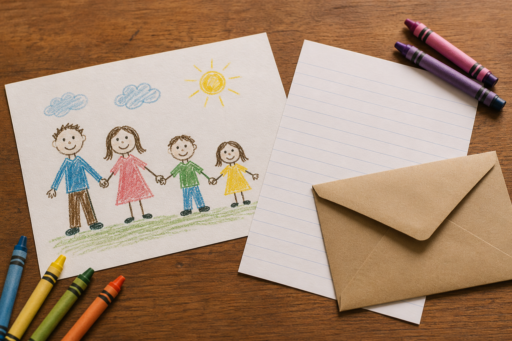
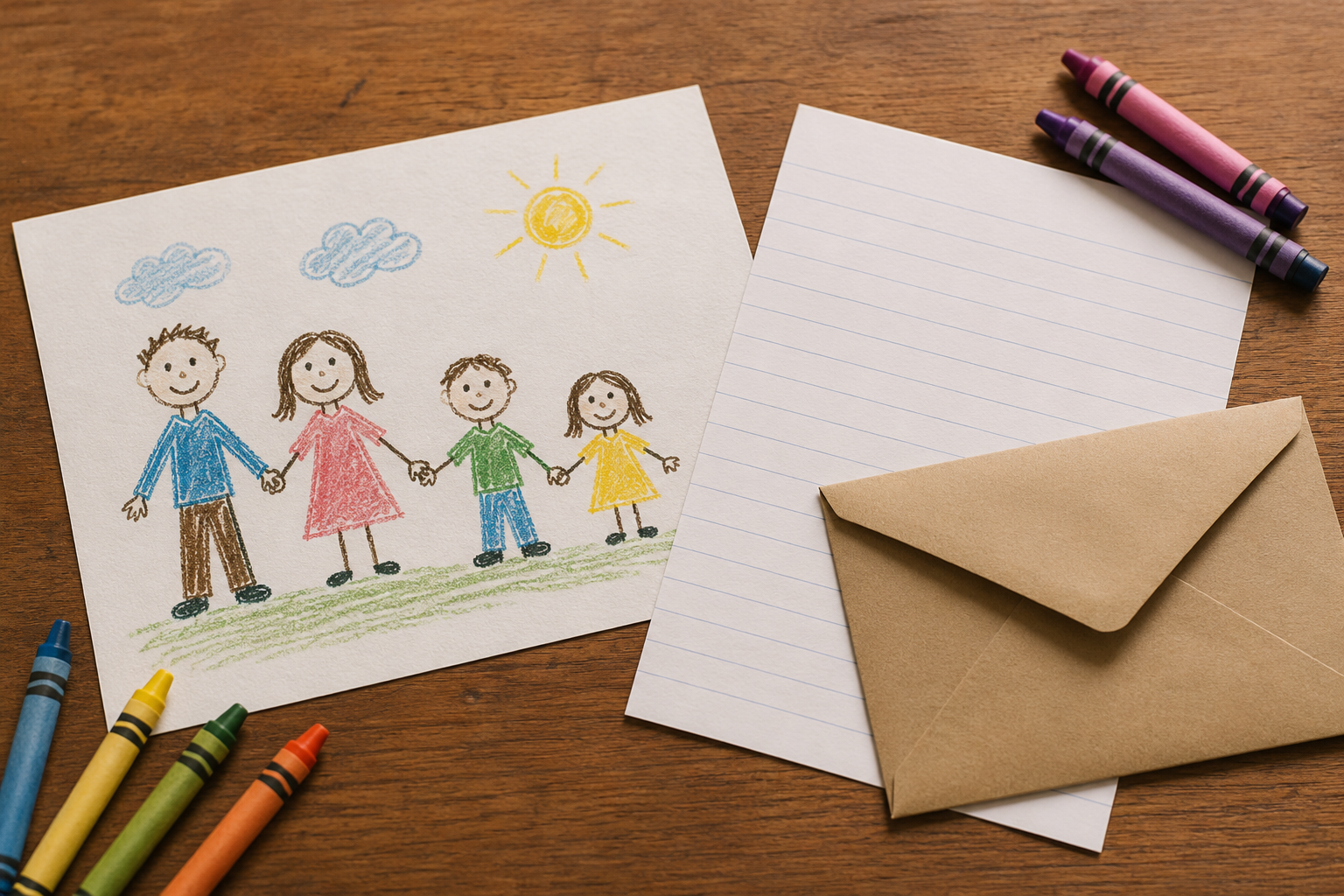
Choose a family member, a friend or even another child whose parents are happy to join in. Encourage your children to tell them about school, football, favourite books or the strange insect they found in the garden. Decorate the envelope. Add a drawing. Pop a sticker inside.
Then wait. The waiting is part of the fun.
When the reply finally arrives a few days later, it’s amazing how much more exciting it feels than another notification on a screen.
Start the morning with a question instead of a screen
I’ve realised the first five minutes of the day often shape the next five hours.
It’s incredibly easy to drift into breakfast with the television on or phones nearby while everyone slowly wakes up. We’re all guilty of it.
Instead, we’ve started trying something much simpler.
A notebook.
Each morning, write one question at the top of the page.
What’s something kind you could do today?
If animals could talk, which would be funniest?
What’s one thing you’re looking forward to?
Draw your dream treehouse.
There’s no right answer and no pressure to write neatly. Some mornings it’s one sentence. Other mornings it’s a page of drawings.
The aim isn’t to produce tiny philosophers before school.
It’s simply to begin the day creating something before consuming something.
Become experts at picnics
Children have an incredible ability to believe food tastes better when it’s eaten somewhere unusual.
The same sandwiches.
The same strawberries.
The same crisps.
Move them from the kitchen table to a picnic blanket and somehow you’ve created an adventure.
We’ve had picnics in parks, woodland clearings, beside canals and occasionally just in the back garden because nobody could be bothered to drive anywhere.
Take a football, a frisbee or nothing at all.
You’ll be surprised how much longer children stay outdoors when lunch doesn’t signal the end of the adventure.
Read chapter books, even when they’re old enough to read themselves
One of the biggest mistakes I almost made was assuming that once children can read independently, story time naturally comes to an end.
It doesn’t have to.
Reading aloud becomes less about teaching them to read and more about sharing a story together.
Choose books that are slightly beyond what they’d normally tackle alone. Stop at the end of an exciting chapter. Let them speculate about what happens next.
Those twenty minutes before bed often become less about the book and more about the conversations it sparks afterwards.
Bake something that doesn’t matter if it goes wrong
Children aren’t particularly interested in perfection.
Adults are.
That’s why baking together can be surprisingly liberating if you let go of the idea that the end result needs to look like something from a cookbook.
Let them crack the eggs. Measure the flour. Stir far too enthusiastically. Taste the chocolate chips. Yes, it takes longer. Yes, the kitchen will look like it’s been hit by a small tornado. But they’re learning maths, patience, teamwork and the comforting reality that making a mess is often part of making something worthwhile.
Collect nature instead of souvenirs
Some of our favourite walks have had no destination whatsoever.
We’ve simply gone looking.
Interesting leaves. Unusual stones. Feathers. Conkers. Pine cones.
Not because they’re valuable, but because children are brilliant at noticing things adults stopped seeing years ago.
Bring them home and press leaves inside a book, paint the stones or keep a small nature shelf that changes with the seasons.
It costs nothing, slows everyone down and somehow makes even familiar walks feel like an expedition.
Build dens like it’s 1997
I’m convinced blanket forts are one of childhood’s greatest inventions.
You don’t need a kit.
You don’t need instructions.
You certainly don’t need social media-worthy photographs.
Just chairs, blankets, cushions and a willingness to surrender your living room for an afternoon.
The best dens aren’t the neatest ones.
They’re the ones that look as though they might collapse at any moment, yet somehow survive long enough to become cafés, pirate ships, libraries and secret headquarters all in the same day.
There’s something wonderfully timeless about a den. Every generation seems to build them.
Maybe that’s because every generation secretly wishes adulthood involved a few more blankets draped over dining chairs.
Plant something and let time do the teaching
Children are used to instant results.
Press a button and something happens. Ask a question and an answer appears. Watch a video and another one begins before the first has even finished.
Growing something quietly rebels against all of that.
Whether it’s tomatoes in a grow bag, strawberries in a pot or a handful of sunflower seeds on the windowsill, gardening teaches lessons that no app can. You can’t rush it. You can’t skip to the end. You have to water it, wait and trust that something is happening beneath the surface.
When the first tomato finally appears, it somehow tastes better because they’ve been part of the journey from the beginning.
Create an adventure jar
One rainy Sunday we scribbled dozens of simple ideas onto scraps of paper and dropped them into an old glass jar.
Visit a new park.
Build a paper aeroplane competition.
Have breakfast for dinner.
Take a torch into the garden after dark.
Make pizzas.
Walk somewhere you’ve never walked before.
Now, whenever someone claims there’s “nothing to do”, somebody picks an idea at random.
Not every adventure becomes a core memory. Some last fifteen minutes before everyone loses interest.
That’s perfectly fine.
The point isn’t perfection. It’s making “What shall we do?” a little easier to answer.
Leave your phone in your pocket
This one isn’t really for the children.
It’s for us.
I’m as guilty as anyone of reaching for my phone to check the football scores, reply to a message or quickly look something up. Before long, “just a second” has quietly turned into ten minutes.
Children notice.
Not because they feel ignored every time we glance at a screen, but because they copy what we model.
I’ve started leaving my phone inside when we’re in the garden. It felt strangely uncomfortable at first. Now it feels strangely freeing.
It turns out the world carries on quite happily without me checking it every few minutes.
Keep a family scrapbook
We take more photographs than any generation before us.
We also print fewer.
Thousands of family moments end up trapped on phones, only to be rediscovered years later while searching for a parking ticket or a screenshot.
Every few months we print a handful of favourites.
Nothing elaborate.
They go into a scrapbook with ticket stubs, children’s drawings, holiday maps and the sort of tiny keepsakes most people throw away.
One day the photographs will matter.
I suspect the scribbled captions written by little hands will matter even more.
Rediscover card games
Board games are brilliant, but they often involve clearing the dining table, finding missing pieces and reminding yourself of rules you’ve forgotten since Christmas.
A pack of cards fits into a kitchen drawer.
Snap.
Go Fish.
Crazy Eights.
Rummy.
Children don’t particularly mind what you’re playing. They’re usually far more interested in the fact that you’re playing together.
It’s one of those activities that’s travelled through generations for good reason.
Simple things often survive because they work.
Turn cardboard into something ridiculous
Before you recycle that enormous delivery box, pause for a moment.
Ask one question.
“What could this become?”
I’ve seen cardboard transformed into racing cars, castles, rocket ships, puppet theatres and cafés.
The beauty is that children don’t see rubbish.
They see possibilities.
If anything, adults are the ones who need reminding that imagination rarely arrives in shiny packaging.
Listen instead of watching
Long car journeys have become almost synonymous with films on tablets.
Sometimes that’s absolutely the right call.
Other times, try an audiobook instead.
Stories without pictures ask children to create the images themselves. Characters, places and adventures all exist inside their own imagination rather than someone else’s animation studio.
It’s a subtle difference, but an important one.
Listening together also creates unexpected conversations afterwards. Who was your favourite character? What do you think happens next? Would you have made the same decision? Stories don’t have to end when the chapter does.
I’ve written about Yoto and Toniebox story boxes for children and recommend.
Let them help with dinner
Cooking together isn’t always efficient.
Actually, it’s almost never efficient.
It takes longer, creates more washing up and occasionally results in ingredients mysteriously disappearing before they reach the pan.
But children love feeling useful.
Whether they’re washing vegetables, stirring pasta sauce or sprinkling cheese over homemade pizzas, they’re learning far more than how to follow a recipe.
They’re learning confidence.
They’re learning responsibility.
Most importantly, they’re learning that family life isn’t something they simply watch happening around them. They’re part of making it happen.
Don’t be afraid of boredom
If there was one idea I’d hope every parent takes away from this article, it’s this.
Boredom isn’t a parenting failure.
It’s often the beginning of something much more interesting.
The next time you hear those familiar words, “I’m bored”, resist the temptation to solve it immediately.
Give it five minutes.
Not because you want your children to be unhappy, but because you’re giving their imagination a chance to wake up.
Sometimes nothing happens.
Sometimes magic does.
Childhood isn’t measured in screen time
It’s easy to obsess over hours, limits and parental controls.
Those conversations matter, but I sometimes think they distract us from a simpler question.
What are we replacing screens with?
Because taking something away without offering anything in return rarely works for long.
The aim has never been to eliminate technology from our family life. It couldn’t be, and I don’t think it should be.
The aim is simply to fill our days with enough walks, conversations, baking, reading, den building, muddy adventures and quiet moments that screens naturally become just one part of childhood rather than the whole of it.
Years from now, I doubt my children will remember how many episodes of a programme they watched on a rainy Tuesday in November.
I hope they’ll remember the den that took over the living room.
The letter that arrived in the post with their name on it.
The tomato they grew themselves.
The picnic where it rained halfway through and everyone ended up laughing while sprinting back to the car.
Those are the moments that quietly become family history.
And if we can create a few more of them, I think we’re doing alright.


