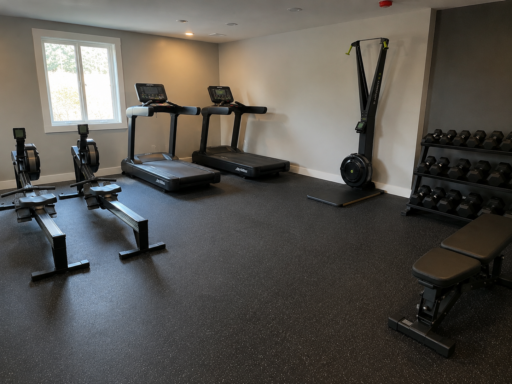



For years, I had creatine filed away in the same mental drawer as shaker bottles the size of a petrol can, stringer vests, and men called Kyle explaining “gym gains” like they’ve just discovered fire.
In my head, it was a heavy gym-goer supplement. Not for me. Not for normal life. Not for a dad trying to hold together work, family, sleep, health, and the occasional scrap of dignity before 8am.
But the more I looked into scientifically backed supplements, the more creatine kept popping up like that one person at a party who turns out to know everyone. I was asking ChatGPT about evidence-based supplements that could support my broader health goals, and creatine kept muscling its way into the conversation. Not in a hypey, miracle-pill sort of way. More in a boringly credible, “there is actually a lot of evidence behind this” sort of way.
That got my attention.
Because once you strip away the gym-bro packaging, creatine is not really about vanity. Or not only vanity, anyway. Yes, it is well known for supporting muscle growth, strength, and exercise performance. But there is also growing interest in what it might do for brain energy, mental clarity, and resilience, particularly when life has been a sleep-deprived bin fire.
That, for me, was the interesting bit.
Why I Decided to Try Creatine
I am on a supplement journey, but I am trying to do it with at least one foot planted on the ground. I am not interested in buying tubs of expensive optimism with a lightning bolt on the label. I want supplements with a decent scientific case behind them, something that feels less like marketing theatre and more like a sensible addition to the wider picture.
Creatine ticked that box.
It is one of the most studied supplements out there. That alone makes it stand out in a market full of glossy nonsense and ingredients that sound like they were invented during a fever dream in a wellness shed.
At first, though, I still had a bit of resistance. I did not see myself as the target audience. I was not trying to become a bodybuilder. I was not chasing heroic deadlifts or entering a phase of referring to my lunch as “fuel”. I was far more interested in feeling sharper, more resilient, and slightly less ruined by poor sleep or the general glorious chaos of dad life.
That was the nudge. If creatine could help physically and possibly offer something on the cognitive side too, it felt worth a try.
What Creatine Actually Is, Without Turning This Into GCSE Biology
In simple terms, creatine helps your body produce quick energy. Most of it is stored in your muscles, which is why it is so closely linked to exercise performance and muscle support. But the brain also uses a lot of energy, which is why researchers have become interested in whether creatine may help there too.
That does not mean it turns you into a supercomputer. You are not suddenly solving advanced maths problems in the cereal aisle. But it does help explain why creatine has moved beyond just being seen as a gym supplement and into the wider conversation around everyday performance, recovery, and mental resilience.
The important thing to say clearly is this: the muscle and performance benefits are very well established. The cognitive side is promising, but not fully settled. There is some interesting evidence around memory, attention, processing speed, and support during sleep deprivation, but it is not one of those neat, universal, everyone-will-feel-it-in-the-same-way sort of things.
Which is probably why it appealed to me. I was not expecting fireworks. I was looking for something grounded.
How I Started Taking It
I kept it very simple.
I started with one flat teaspoon in my morning shake and just did it every day. No loading phase. No dramatic supplement ceremony. No standing in the kitchen like a Victorian apothecary. Just one flat teaspoon, every morning, built into a habit I was already doing.
That mattered more than anything else. Everything I read pointed to consistency being key. Creatine is one of those supplements where regular daily use seems to matter far more than some perfect timing strategy. I did not want another health habit that looked good for four days and then got abandoned behind the coffee machine.
So I anchored it to breakfast and got on with my life.
That, in itself, is worth saying because the best supplement routine is usually the one that survives contact with real life.
What I Noticed Physically With Creatine
The first thing I noticed was not subtle.
My arms, especially my biceps, looked fuller. Not cartoonishly bigger. Not as if I had secretly joined a travelling circus strongman troupe. Just fuller. More solid. A bit more defined. It was enough that I clocked it fairly quickly and kept noticing it over the following weeks. I could feel it in my arms… they were more squeezable.
I have always naturally had broad shoulders and slightly larger arms anyway, so I am not starting from a baseline of Victorian chimney sweep. But even so, there was a noticeable difference. The shape looked better. The muscles looked more alive, for want of a less ridiculous phrase.
Some of that, to be fair, is likely down to creatine increasing water content within the muscle. That sounds less sexy than “lean mass support” and more like something a plumber would diagnose, but it is a normal part of how creatine works. And frankly, if the result is that your arms look a bit better in a T-shirt without you having to become one of those men who says “push day” with a straight face, I am not complaining.
It continued for several weeks too, which made it feel less like a one-off fluke and more like a genuine response.
The Bit I Was Most Interested In: Mental Clarity
This was the real reason I wanted to try it.
Not because I wanted to become a genius. That ship sailed when I had children and willingly entered a lifestyle where I can spend ten minutes looking for a shoe while holding the shoe.
What interested me was the possibility that creatine might support cognitive clarity and reduce the sheer brutality of poor sleep.
I am probably around three months into taking it now, and while I need to be careful not to overstate it, I do think something has shifted.
The biggest thing I have noticed is that poor sleep feels less punishing. I track sleep with my Oura, and when I have had a ropey night, it no longer feels quite so terminal the next day. That does not mean I bounce out of bed like an overenthusiastic life coach. It means the day feels less like a total write-off.
And that matters.
Because when The Older One wakes me early, or sleep gets chopped up for whatever reason, the old feeling was often that the whole day had already been mugged before breakfast. That heavy, foggy, brittle feeling where everything takes more effort and your patience can vanish because someone has asked for toast in the wrong bowl.
That edge seems softer now.
Again, I want to be measured here. I cannot isolate creatine in a laboratory vacuum because it is part of a wider supplement routine and a broader effort to improve my health. But in the round, cognitive clarity does feel better and the impact of poor sleep feels less savage than it used to.
That has been enough for me to keep going.
Why I Increased My Creatine Dose
After a while, I moved up to two teaspoons.
My thinking was simple. I had read that most creatine in the body is stored in muscle, and because my main interest was the cognitive side as much as the physical side, I became curious about whether a bit more might better support that side of the equation too.
I should be clear though, this is where personal experimentation and settled science are not quite the same thing. It is fair to say muscles hold the majority of the body’s creatine stores. It is also fair to say research into creatine and the brain is still evolving. What is less fair is making it sound as if the muscles greedily nick most of it and the leftovers toddle off to the brain like crumbs from the table. The body is a bit more complicated than that.
So for me, increasing the dose was an experiment, not a certainty.
And that is probably the right way to frame creatine generally. It is very well supported in some areas, promising in others, and still worth approaching with a bit of humility rather than supplement swagger.
The Benefits of Creatine, in Plain English
If you strip out the nonsense and just look at the broad picture, creatine has a lot going for it.
It is best known for helping with strength, power, exercise performance, and muscle support. That is the headline act and the evidence there is strong. If you train, even moderately, that alone makes it interesting.
It is also very safe and very well researched for healthy adults when used appropriately. In supplement terms, that puts it in rarefied air. A lot of the industry seems built on vibes, wishful thinking, and labels that look like they were designed by a nightclub. Creatine, by contrast, has actual substance behind it.
Then there is the cognitive angle. This is where people need to keep their shirt on. Some research suggests creatine may support aspects of mental performance, particularly under stress or fatigue, and there is growing interest in its role in brain energy and resilience. But it is not settled enough to start declaring it a miracle for focus or a fix for tiredness.
That is not disappointing, though. In some ways it is more reassuring. I would rather take something that is strongly backed for physical benefits and plausibly helpful for cognitive resilience than something marketed as a brain booster by a man with luminous teeth and no obvious qualifications.
What I Like About Creatine Most
What I like most is how unflashy it is.
Creatine does not feel sexy. It does not come with spiritual language or a manifesto. It is not trying to become your personality. It is just a very well-researched supplement that quietly gets on with its job.
That suits me perfectly.
It is easy to take. It is easy to build into a routine. It is not absurdly expensive. And unlike plenty of supplements, it actually feels noticeable. The physical effect was obvious enough. The mental side has been more subtle, but still meaningful.
There is something quite refreshing about a supplement that does not need a fanfare. It just turns up, clocks in, and does a proper day’s work.
A Sensible Word on Safety
This is a dad blog, not a disclaimer farm, but it is worth saying a few sensible things.
Creatine monohydrate is the form with the strongest evidence behind it and the one most people should focus on if they are considering it. For healthy adults, it is generally considered very safe when used appropriately. That strong safety profile is part of the reason it keeps showing up in evidence-based recommendations.
That does not mean more is always better, or that everyone should blindly pile in. Anyone with kidney issues or other medical concerns should speak to a healthcare professional first. And as with most supplements, there is a difference between sensible use and behaving like you are trying to join a minor league wrestling promotion.
Normal caution. No drama. No hysteria.
Why Creatine Has Earned a Place in My Supplement Dad Stack
I have already written about my magnesium journey, and that is probably a good comparison point. I am interested in supplements that feel practical, noticeable, and sustainable. Not fantasy products. Not health theatre. Just things that support how I want to feel and function.
Creatine has earned its place in that conversation.
I started out thinking it was only for heavy gym-goers. The sort of supplement that lived on the shelves of men who call chicken and rice “clean”. What I have found instead is that it has been one of the more useful, straightforward additions to my routine.
My arms look fuller. My muscles look a bit better defined. More importantly, my mental clarity seems better and poor sleep does not hit me with the same blunt-force trauma it used to.
Could I prove every bit of that in a lab? No. And I do not need to pretend otherwise. This is my lived experience, not a white paper.
But from where I am standing, about three months in, creatine feels like one of those rare supplements that manages to be both scientifically credible and personally noticeable.
That is a strong combination.

Final Thoughts
If you are a normal person, a busy parent, or someone trying to improve your health without disappearing into supplement folklore, creatine is worth understanding properly.
It is not just for gym bros. It is not magic either. It sits in that sweet spot of being well researched, widely used, affordable, easy to stick to, and, in my experience, genuinely helpful.
And in a world full of wellness nonsense dressed up like wisdom, that is quite refreshing.
For me, that is why it has stayed.
Not because I wanted to become some mass-gaining colossus with a shaker bottle and a neck wider than my head. But because it fits neatly into everyday life, seems to do what it says on the tin, and has made me feel that little bit sturdier, physically and mentally, in the middle of normal family chaos.
Which, in dad terms, is about as good an endorsement as you can get.