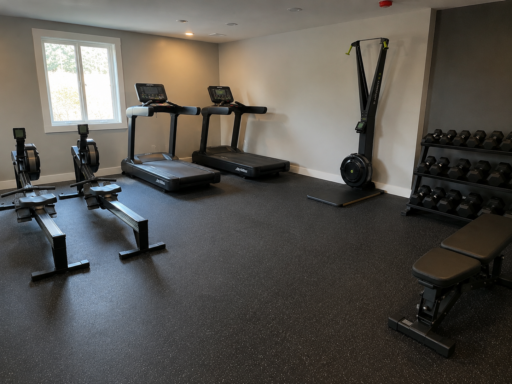



I’ve never been a gym guy.
You know the ones. Effortlessly confident. Gliding between machines like they’ve got a backstage pass to their own biceps. Meanwhile, I’m hovering near a treadmill trying to remember if I’ve stretched, or if I’ve just stood there staring into space like a man waiting for a bus that isn’t coming.
It has never felt like my world.
Despite being fairly broad and reasonably strong, largely thanks to years of lugging children around with no regard for my spinal health, I’ve never quite clicked with gyms. Too intense. Too artificial. Too many mirrors for a man who just came to move his body without seeing himself reflected back from 14 angles. It’s never been my bag and I just don’t feel comfortable in them.
Walking, though. That’s different. That’s where everything changed.
How Walking Accidentally Became a Non‑Negotiable Part of Dad Life & Supporting Mental Health
Since becoming a dad, walking has quietly become one of the most important parts of my routine.
Not in a dramatic, new‑identity way. There was no moment where I bought specialist gear or announced anything on social media. It was more of a “if I don’t get out of this house soon, I’m going to start reorganising the fridge for entertainment” situation.
We’re lucky where we live. There are open fields, plenty of routes, and enough variation to stop it feeling repetitive. Every walk feels just different enough to stop your brain switching off completely. No one wants to feel like they’re stuck inside a real‑life screensaver.
What I didn’t expect is how much this simple habit would give back. It is not just about fresh air or movement. Walking has quietly crept into the role of something I genuinely rely on.
Working From Home Killed the Commute, Walking Replaced It
One of the biggest changes with modern life, especially working from home, is the disappearance of the commute.
Which sounds brilliant. And is brilliant. Right up until you realise that commute was doing far more work than you gave it credit for.
It was your buffer. That strange in‑between zone where you stopped being “at work” and slowly became “human again”. Time to decompress, process the day, maybe sit in silence rather than immediately mediating an argument about snacks.
Now it is straight from closing the laptop to “Dad, where’s my…?” in roughly four seconds. Walking fills that gap perfectly.
A fifteen to twenty minute walk before re‑entering the house and I am a noticeably better version of myself. Calmer, more patient, and significantly less likely to react like someone who’s been asked for their third drink refill before they’ve even sat down.
It is not therapy. But it is uncomfortably close for something that involves trainers and a pavement.
Walking and Mental Health: A Reset That Actually Works
This is the big one. Walking has become my mental reset button.
Some days it’s a podcast. Something informative or vaguely intelligent to counterbalance the rest of my mental input. Other days it’s music, usually something that makes me feel like I’m starring in a slow‑motion montage of my own life. This is optimistic, given I’m normally navigating dog walkers, potholes and the occasional rogue scooter.
And some days, it is nothing at all.
No sound other than birds, wind, and the distant hum of someone mowing their lawn like they’re preparing for a regional competition.
Especially in spring, it is incredibly grounding. After a long, overstimulating day, walking gently turns the volume down on everything. Your brain stops buzzing like a dodgy lightbulb that you’ve been meaning to replace for weeks.
I come back clearer and lighter, with more patience than I left with. It is subtle, but it is powerful.
Walking Is Exercise, Just Without the Performance
Walking does not shout about itself.
It does not flex in the mirror. It does not demand matching outfits or a dramatic soundtrack. But it absolutely counts.
A decent‑paced walk can burn around 200 to 300 calories an hour. Over days and weeks, that adds up surprisingly quickly. Especially when it is something you can do consistently without feeling like you’ve survived a fitness bootcamp run by someone who thinks motivation is mainly shouting.
For weight maintenance or gentle fat loss, it is ideal.
There is no soreness, no dread, and no mental barrier to doing it again tomorrow. Fifteen minutes between meetings still counts. An hour when the diary allows counts even more. There is no pressure for it to be perfect.
Even the walks where half your time is spent negotiating with a small human about why we cannot, under any circumstances, bring a random rock home.
The Anti All‑or‑Nothing Fitness Plan
This is where walking really wins.
Most fitness routines fall apart because they demand perfection. Miss a session and suddenly the narrative becomes, “Well that’s ruined now, I’ll start again next month”. Walking does not have that energy at all.
A short loop still counts. A chaotic wander still counts. A walk that involves stopping every twelve seconds because someone has discovered “the best stick ever made” absolutely still counts.
It keeps momentum alive, and momentum is the thing most plans forget about.
Why Having a Walking Goal Gets You Out the Door
I realised fairly quickly that having a target changes everything.
Last year, I set myself a challenge on Strava to walk the equivalent of twelve marathons across the year. That is 314 miles. I hit it.
This year I have gone bigger. Six hundred miles, which is just shy of twenty‑three marathons. Not because I have suddenly become ultra‑disciplined, but because having a number gives you a nudge.
Even when it is raining. Even when you cannot be bothered. Even when the sofa is making a very persuasive argument for your immediate presence.
You do not need to smash a long walk every time. Sometimes it is just a quick loop. But mentally, you are still moving forward, and that sense of progress adds up faster than you think.
Low‑Impact Exercise for Dads Who Can’t Afford an Injury
A lot of well‑intentioned fitness plans end with someone limping slightly and saying, “I think I’ve done something to it”.
Running after years off. Five‑a‑side football. Over‑enthusiastic gym sessions driven by guilt and nostalgia. Walking is different.
It is low impact and forgiving. Something you can do daily without your body staging a formal complaint. When time is limited and energy is already stretched thin, that matters more than most people realise.
Walking With Kids Works With Them, Not Against Them
Most things sold as “family fitness” sound brilliant in theory and collapse into chaos within minutes. Walking genuinely works.
Buggies, scooters, slow wandering, unnecessary detours. It flexes to fit whatever mood the kids bring that day. There is no structure to break and no pressure to perform. It simply becomes an adventure.
And because they do not see it as exercise, there is no resistance. Which is the real trick.
The Unexpected Win: Proper One‑to‑One Time
This surprised me more than anything.
Walking has become one of the best ways I connect with The Older One. Sometimes it is a short walk before bed to decompress and chat about the day. Other times it becomes a weekend mission.
Last bank holiday we walked five miles across fields, streams and countryside styles to our local pub. He helped navigate, checked the route and took the responsibility seriously.
We had an absolute blast. It was a wonderful day.
Yes, I may have mentioned the pub lunch at the end as motivation. I am not above a well‑timed incentive. But it gave us something shared and memorable, without queues, tickets or overstimulation. Just time together.
Social Without the Admin
Meeting a mate for a walk is one of the simplest wins going.
There is no big plan, no logistics and no awkward question about when you are leaving. You just walk and talk.
It is low effort, high reward, and far more likely to happen than anything involving babysitters, shared calendars or a group chat that goes suspiciously quiet the moment someone suggests an actual date.
Walking Helps Everyone Sleep Better
Fresh air and movement do wonders for sleep.
For kids, a short walk before bed can take the edge off that last burst of chaos energy (see my thoughts on prepping kids for bed). For you, it helps your brain switch off so you are not lying there replaying your to‑do list like it is a greatest hits album.
It is not a magic fix, but it absolutely helps.
A Phone Detox Without the Announcement
There is no dramatic moment where you delete all your apps and tell everyone about it. You just stop checking your phone as much.
You are moving, looking around and thinking. Space appears without force, which feels increasingly rare.
Quiet Progress That Is Just Yours
There is something deeply satisfying about watching miles build up.
For dads, where so much effort goes into everyone else, having something where progress is visible and personal is a genuine mental win. It is not loud or showy, but it matters.
Cheap, Simple and Weirdly Effective
No membership, no gear obsession, no hidden costs.
Given the mental health benefit alone, it feels borderline criminal how effective walking is for something that costs nothing. Fresh air, movement and a clearer head are all available the moment you step outside.
Final Thought: Why Walking Is the Best Fitness Habit for Dads (And Why It’s Stuck)
Walking hasn’t turned me into an athlete, and it definitely hasn’t transformed me into someone who enjoys burpees or voluntarily signs up for anything labelled “high intensity”.
What it has done is quietly become one of the most effective things I do for my mental health, my physical health, and my ability to show up as a dad without feeling permanently fried.
It clears my head in a way very few things manage. After long days, especially working from home, walking gives me the buffer I used to get from a commute. It slows my thoughts down, takes the edge off the stress, and stops me carrying work straight through the front door like an extra unwanted bag.
From a fitness point of view, it just works. It is proper exercise without the drama. Low impact, repeatable, and sustainable. Something I can do most days without injury, guilt or needing a motivational speech. For dads who are tired, busy and not interested in blowing themselves up on leg day, that matters.
I love the tracking side too. Strava quietly logging the miles. My Oura ring gently confirming that yes, moving more and getting outside does actually help with sleep and stress. No pressure, no punishment, just data building a picture over time. Progress you can see, without needing to perform for anyone else.
Then there’s the part I didn’t plan for at all. Walking has become a way to spend proper time with my boy. Not side‑by‑side on screens, not rushing somewhere noisy, but walking, talking, navigating, getting muddy and occasionally aiming for a pub lunch as a morally sound incentive. Those miles matter in ways no app can measure.
Dad mental health matters. Feeling steady matters. Having a habit that helps you move your body, clear your head, track progress and connect with your kids, all without needing a membership or a personality transplant, really matters.
Walking isn’t flashy. It doesn’t demand a new identity or a big announcement. It just turns up, does its job quietly and improves things in the background.
For me, it’s not “just walking”.
It’s fitness that sticks.
It’s mental health support I actually use.
It’s time with The Older One that counts.
It’s infrastructure for staying vaguely sane. And honestly, that’s more than enough.